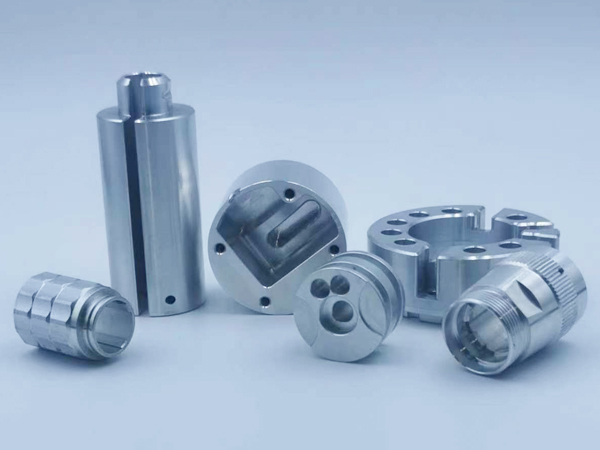
Application of Five-Axis Simultaneous Machining Centers in Mold Making
Five-axis simultaneous machining centers are a crucial component of CNC machining. This technology has been widely adopted in shipbuilding, aerospace, automotive, light industry, medical equipment, and other high-precision manufacturing sectors. In traditional mold making, three-axis machining has been commonly used. However, with the continuous development of mold machining technology, certain limitations of conventional vertical machining centers and three-axis machining centers have gradually become apparent. Currently, ball‑end cutters are widely used in mold manufacturing. Although their advantages in mold making are obvious, when used on a vertical machining center the cutting speed at the tool tip is essentially zero, leading to poor machining accuracy. This section analyzes the advantages of five‑axis simultaneous machining centers in mold making and discusses their application.
In five‑axis simultaneous machining, side milling can replace ball‑end cutters to maintain the shape of complex mold surfaces, which can greatly reduce machining time. The principles of five‑axis simultaneous machining centers are also well suited for side milling angled surfaces, effectively eliminating the ridges left by ball‑end cutters. This makes the surface finish of the mold more ideal and reduces the manual cutting and hand‑finishing work otherwise needed to clean up the mold surface.
With five‑axis simultaneous machining technology, the problem of needing multiple adjustments and re‑clamping when repositioning a workpiece at a tilted angle is solved. This not only saves time but also significantly reduces errors and the high cost of fixtures required for workpiece setup. The machine tool can also handle the machining of complex parts — such as milling of intricate angled surfaces, surface finishing, and cavity machining — all of which are impossible with traditional methods.
Five‑axis simultaneous machining commonly uses standard cutting tools. Complex parts can be machined in a single setup. Without the need for re‑clamping, or the multiple tool changes and setups demanded by three‑axis machining, mold machining can be carried out in one continuous operation, resulting in excellent part manufacturability.