Classification of CNC Machining Centers
A CNC machining center is an automated machine tool equipped with a programmed control system. Due to the increasing demands for intelligence and automation in the manufacturing industry, CNC machining centers are developing rapidly, especially in South China and East China. According to statistics, the annual number of CNC machine tools used for mobile phone housing processing is in the order of hundreds of thousands, representing a huge market!
1. Classification of Machining Centers
Machining centers are generally classified according to the spatial orientation of the spindle into vertical machining centers, horizontal machining centers, gantry-type machining centers, and universal machining centers. The spatial configuration where the spindle is in a vertical state is called a vertical machining center, and the configuration where the spindle is in a horizontal state is called a horizontal machining center.
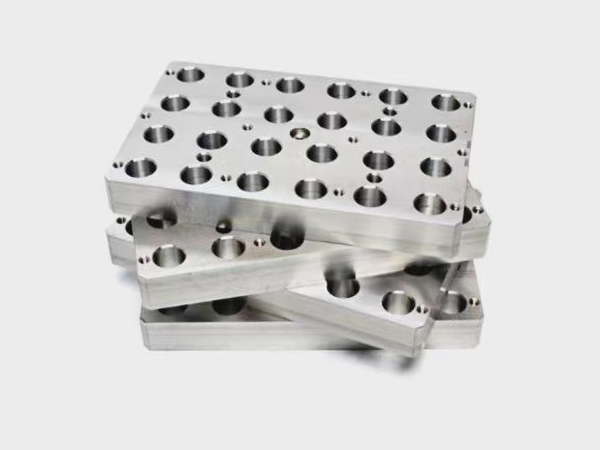
Vertical Machining Center: The structure is mostly a fixed column type, with a rectangular worktable, suitable for processing plate, cover, and slab-type parts.
Vertical machining centers offer convenient clamping, easy operation, convenient observation of the machining process, and easy program debugging. However, affected by the column height and the tool changing mechanism, they cannot process parts that are too tall. They are relatively low in price.
Horizontal Machining Center: Generally adopts a movable column, with the spindle box located between two columns and moving up and down along guide rails. A horizontal machining center typically has three linear motion coordinates: moving left and right facing the machine serves as the X-axis, moving forward and backward as the Z-axis, and moving up and down as the Y-axis. A horizontal machining center can also be equipped with a rotary table, with the fourth axis being an A-axis. It can process parts such as helical gears and cylindrical cams.
Horizontal machining centers are inconvenient for observing program debugging and cutting tests, inconvenient for monitoring the machining process, and inconvenient for part clamping and measurement, but they easily facilitate chip evacuation. They are large and relatively expensive.
Gantry-Type Machining Center: Its spindle is mostly vertical, equipped with an ATC system, and features replaceable spindle head attachments. With interchangeable system software functions, it can be used for multiple purposes and is suitable for processing large parts.
Universal Machining Center: A universal machining center is a five-face machining center, possessing the functions of both a vertical machining center and a horizontal machining center. Common universal machining centers include: 1) The spindle can rotate 90 degrees, allowing it to operate as a vertical machining center or as a horizontal machining center. 2) The spindle does not change direction, but the worktable rotates 90 degrees with the workpiece, completing five-face machining.
According to the number and function of worktables: there are single-worktable machining centers, dual-worktable machining centers, and multi-worktable machining centers.
2. Structural Composition of Machining Centers
Generally speaking, it mainly consists of the following parts.
(1) Basic Components. This is the fundamental structure of the machining center, composed of the bed, column, and worktable. It mainly bears the static load of the machining center and the cutting forces generated during the machining process, therefore it must have sufficient rigidity. These large components can be made of cast iron or welded steel structures. They are the largest and heaviest parts in a machining center.
(2) Spindle Components. Composed of the spindle box, spindle motor, spindle, and spindle bearings. The start, stop, speed change, and other actions of the spindle are all controlled by the CNC system, and it participates in the cutting motion through the tool installed on the spindle, serving as the power output component for cutting. It is a critical component of the machining center and inevitably determines the machining accuracy and stability of the machining center.
(3) CNC System. The CNC part of the machining center consists of the CNC device, PLC, servo drive unit, and operation panel.
(4) Automatic Tool Changing System. Composed of the tool magazine, manipulator, drive mechanism, etc. When a tool change is needed, the CNC system issues a command, and the CNC machining center's manipulator (or through other methods) transfers the tool from the magazine into the spindle hole. It handles the tasks of automatic storage, selection, transport, and exchange of tools during the machining process.