
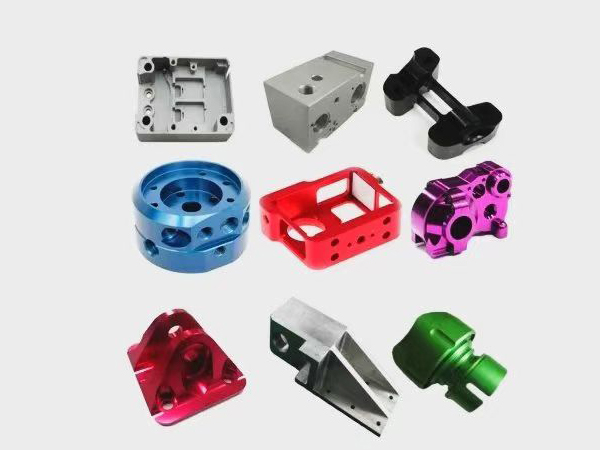
5-Axis Machining for Mold Components — Widely Applied Across Industries
As technology continues to advance, an ever-growing number of high-tech products are entering the market. Most of these products rely on the precise assembly of machined components to function. Modern manufacturing industries adopt component-based assembly methods to produce a wide range of instruments and equipment. Among these, 5-axis machining for mold components stands out as a prime example. Its applications span nearly every sector, and it integrates seamlessly with mechanical products across diverse industries. So, in which industries is 5-axis mold component machining used? Below, we provide a brief overview.
1. Shipbuilding Industry — This sector primarily requires heavy-duty and extra-heavy-duty gantry milling and boring machines for diesel engine blocks, along with various large-scale machined components. Certain parts, particularly crankshaft-type geometries, can only be produced through 5-axis machining of mold components. As a result, 5-axis mold component machining is widely utilized across all types of shipbuilding operations.
2. Aerospace Industry — Because the surfaces and components used in aerospace machinery demand specialized machining to meet stringent specifications, only a reliable 5-axis mold component machining provider can fulfill these requirements. Therefore, 5-axis machining plays a critical role as a core production process within the aerospace sector.
3. Automotive Manufacturing — 5-axis machining for mold components is also widely applied in the automotive industry, which is familiar to most. Automotive parts and assemblies must meet exceptionally high standards, and 5-axis mold component machining is a proven method for enhancing the overall performance and dimensional accuracy of these machined parts.
The above provides a brief introduction to 5-axis machining for mold components. We hope you find this information helpful.