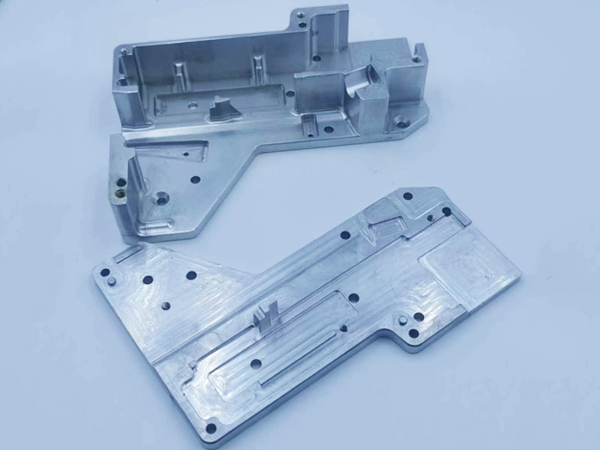
Detailed Requirements and Classification of Mold Component Machining
Concept and Principle of Mold Life: Mold life refers to the number of production cycles (stamping strokes, molding cycles) a mold can achieve while ensuring the quality of the produced parts. It includes the total number of qualified parts formed after repeated sharpening and replacement of wearing parts, until the main part of the mold needs to be replaced.
Mold Service Life: The number of cycles the mold has already produced. Mold failure is divided into abnormal failure and normal failure. Abnormal failure (premature failure) means the mold becomes unworkable before reaching the generally accepted life expectancy at a certain industrial level. Forms of early failure include plastic deformation, fracture, severe localized wear, etc. Normal failure refers to the mold being unable to continue working after mass production use due to slow plastic deformation, relatively uniform wear, or fatigue fracture.
Mold components refer to parts or components used to assemble a mold; they can also refer to mold parts or components that are replaced and reassembled after damage. A precision mold is usually composed of many parts, which can be divided into two categories: process parts and structural parts. Process parts directly affect the quality of the molded product. The decisive quality of process parts in current precision mold components is achieved by finishing machining methods.
The precision machining process is related to the life of the precision mold and the molded products. In the finishing stage of precision mold component machining, in addition to using process methods such as low-speed wire EDM and EDM sinking, another method employed is grinding based on heat treatment after semi-finishing. Therefore, during the grinding stage of precision mold component machining, it is necessary to control many technical parameters such as part deformation, internal stress, form tolerance, and dimensional accuracy.
In specific production practice, many operational difficulties exist. However, from 15 years of accumulated precision machining experience, it is possible to summarize and analyze approaches that can be referenced: By controlling the precision machining process of mold components from the finishing stage, we can perform adaptive machining for different mold parts, different materials, different shapes, and different technical requirements, providing selective solutions.
Controlling the machining process to achieve better machining results and economic efficiency is a key concern for most precision mold component machining enterprises. The process flow for precision mold component machining is generally: rough machining - semi-finishing - (quenching, tempering) - precision grinding - EDM - benchwork finishing - assembly processing.